
Digital Marketing in 2026: What Businesses Really Need to Focus On
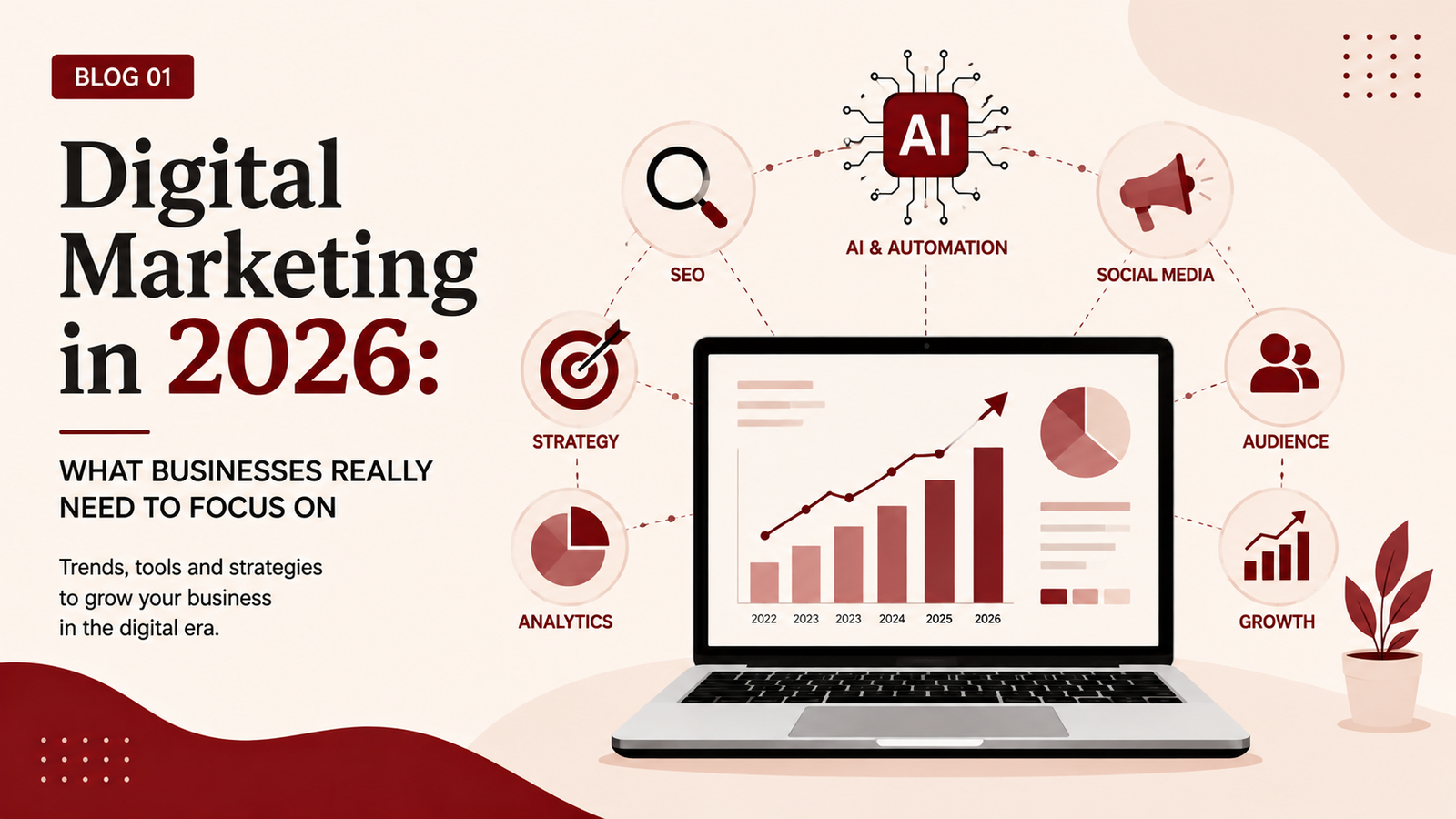
Digital marketing is changing faster than ever. New technologies, changing customer behaviour, artificial intelligence, and evolving search platforms are transforming the way businesses connect with their audiences. Today, having an online presence is no longer enough. Businesses need a clear strategy that helps them reach the right people, build trust, and turn online attention into meaningful results.
As a digital marketer, I believe successful marketing is not about following every new trend. It is about understanding your audience, choosing the right platforms, creating valuable content, and continuously improving your strategy based on results.
Building a Strong Website Foundation
Your website is often the first place where potential customers learn about your business. A professional, mobile-friendly, and easy-to-navigate website can create a strong first impression and help visitors understand what you offer.
A good website should have clear information, simple navigation, strong calls to action, fast loading times, and content that answers your customers’ questions. It should also be optimized for search engines so that people can easily discover your business online.
Your website should not simply look good. It should have a purpose: attract visitors, build trust, and encourage action.
SEO and the Changing Search Landscape
Search engine optimization continues to be an important part of digital marketing. However, the way people search for information is evolving.
People are increasingly using conversational searches, AI-powered tools, voice search, and different platforms to discover information. This means businesses need to focus on creating useful, relevant, and trustworthy content rather than simply filling pages with keywords.
Good SEO starts with understanding what your audience is searching for. Keyword research, quality content, technical optimization, on-page SEO, and a positive user experience all contribute to stronger organic visibility.
The goal is not simply to rank higher. The goal is to appear when your potential customers are looking for what you offer.
Social Media and Short-Form Video
Social media continues to be one of the most effective ways for businesses to connect with their audience. Platforms increasingly encourage short-form, engaging content that can communicate an idea quickly.
Videos, educational posts, behind-the-scenes content, customer stories, and useful tips can help businesses build stronger relationships with their audiences.
However, social media success isn’t only about gaining followers. A smaller, engaged audience can often be more valuable than thousands of passive followers.
The focus should be on creating meaningful engagement, building trust, and encouraging people to take the next step.
AI as a Marketing Assistant
Artificial intelligence is becoming an important part of modern marketing. It can help marketers with content ideas, research, customer insights, data analysis, personalization, and repetitive tasks.
But AI should be treated as a marketing assistant, not a replacement for human creativity and strategy.
The strongest approach is to combine technology with human understanding. AI can help make processes faster, while marketers still need to provide creativity, empathy, brand personality, and strategic thinking.
Personalization and Customer Experience
Customers expect businesses to understand their needs. Generic messages are becoming less effective, while relevant and personalized communication can create stronger connections.
Personalization can include recommending relevant products, creating targeted email campaigns, providing useful content, or tailoring messages to different audience groups.
A good digital marketing strategy should always ask: What does the customer actually need?
When businesses focus on the customer experience, marketing becomes more than promotion. It becomes a way to build long-term relationships.
Measure Leads and Conversions, Not Just Likes
Likes and followers can be useful indicators, but they don’t always represent business success.
Businesses should also monitor website traffic, enquiries, leads, conversion rates, click-through rates, customer acquisition costs, and sales. These metrics provide a clearer picture of whether marketing activities are actually contributing to business goals.
Conclusion:
Digital marketing in 2026 is not about being present on every platform or following every new trend. It is about making smarter decisions.
A strong website, effective SEO, engaging social media, useful content, AI-assisted workflows, personalization, and meaningful performance measurement can work together to create a successful digital strategy.
Ultimately, successful digital marketing is about understanding your audience, choosing the right channels, delivering real value, and consistently working towards measurable results.
That is the approach I believe can help businesses build a stronger and more sustainable online presence